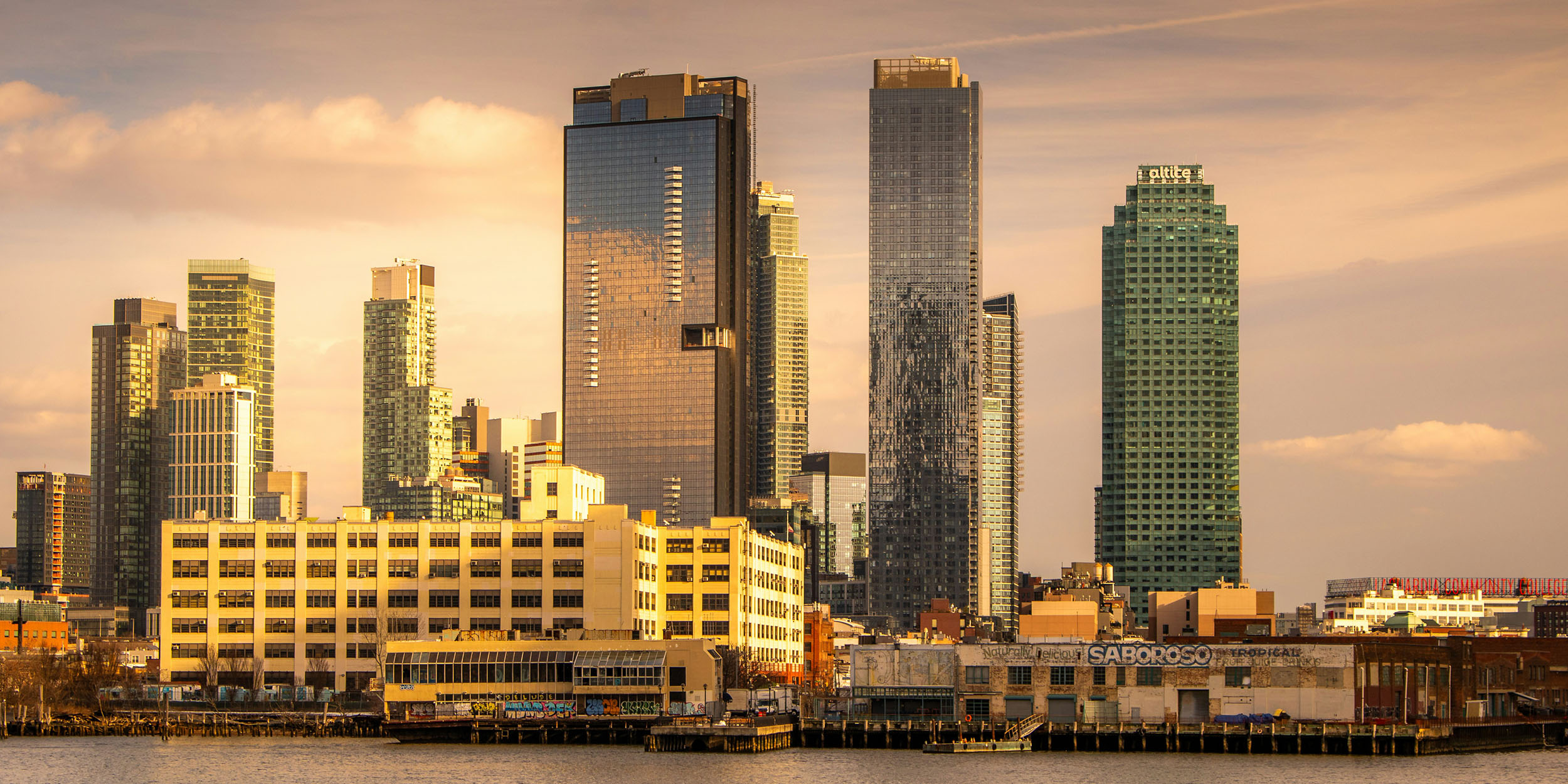
The draft plan assigns Queens Community District 2 the city’s most aggressive growth targets, citing both the district’s high past housing production and its shortage of low-cost rentals.
New York City’s first Fair Housing Growth Strategy assigns Queens Community District 2, covering Long Island City, Sunnyside, and Woodside, a five-year target of 9,145 new homes, including 2,285 income-restricted affordable units, according to the draft report released Wednesday by the Department of Housing Preservation and Development (HPD) and the Department of City Planning (DCP).
The target represents a 12.5% growth rate on the district’s current base of 73,150 homes. That is above the standard target assigned to other high-growth districts citywide, a result of CD2’s dual classification in the report: we fall into the “high growth” cohort based on recent housing production and are also designated a Limited Affordability Area (LAA), meaning we have comparatively few low-cost rentals available relative to what median-income households can afford.
The mandated draft report is New York’s first attempt to translate a citywide housing needs assessment into binding-in-spirit, but non-binding-in-practice targets for each of the city’s 59 community districts. The report states plainly that the targets carry no direct land use requirements. They are intended as a benchmark against which future development activity can be measured.
In CD2, 2,657 net housing units are currently permitted for construction, 29% of the city’s 9,145-unit five-year target for the district.
How the city calculated the target
The report’s methodology sorts all 59 community districts into three cohorts based on their annual housing growth rate from 2016 to 2025, relative to each district’s total housing stock:
- Low growth: bottom third (0.07% to 0.33% annual growth)
- Medium growth: middle third (0.34% to 1.07% annual growth)
- High growth: top third (1.09% to 3.27% annual growth)

CD2 fell into the high-growth cohort, which under the report’s baseline formula is assigned a flat 10% growth target over five years. But the report then applies a separate amplification step for districts also designated Limited Affordability Areas, districts HPD determines have the fewest available rentals affordable to a median-income household. CD2 met both criteria, pushing its target above the cohort baseline to 12.5%.
The report is explicit that the LAA designation is distinct from the separate “Fast Track” districts created by last November’s ballot-approved Charter Revision Commission changes, which measure a different metric (recent production of income-restricted housing specifically, not overall rental affordability).
Found this useful? Buy the Ledger a Coffee
| Metric | Value |
|---|---|
| Limited Affordability Area status | Yes |
| Growth cohort | High |
| Total homes, 2025 | 73,150 |
| Five-year total target | 9,145 |
| Affordable (income-restricted) | 2,285 |
| Deeply affordable (≤60% AMI) | 685 |
| For households experiencing homelessness | 345 |
read More about new hps DEVELOPMENT

Context: Past Growth
CD2’s high-growth classification is consistent with figures HPL has independently verified from Census data. Between 2013 and 2023, the district covering Hunters Point South and Court Square saw population grow 147.4%, from 11,355 to 28,096 residents, while housing units grew 190.4%, an increase of more than 13,100 units. That growth rate is roughly 49 times the citywide rate of 3.0% over the same period.
“The Fair Housing Growth Strategy says out loud what a lot of us have known for years: the housing crisis doesn’t end unless every community takes on its share. Queens CB2 has done that and more,” said Anatole Ashraf, Chair of Queens Community Board 2. “We conditionally supported the OneLIC rezoning — roughly 15,000 new homes and real public investment — because our own neighbors were being priced out. I’m glad to support this strategy, and I hope more neighborhoods across the city join us in creating a city where all New Yorkers can afford to stay in the communities they love.”
Disclosure:
The publisher of the Hunters Point Ledger is a member of Queens Community Board 2. We don’t speak on behalf of Community Board 2 or any other members.
Process And Timeline
HPD and DCP will collect public feedback before finalizing the report later this year. Opportunities to comment include:
- A virtual public briefing on August 26, 2026, at 12:00pm
- Virtual public briefing
- One-on-one conversations with the project team, by request
- Written comments submitted through a feedback form


